
Aosu Video Doorbell R1 Ultra: two-minute review
Doorbell brands usually sell you the hardware cheap and charge you monthly for the privilege of seeing the footage. Aosu has gone the other way, and for that alone the R1 Ultra is worth your attention.
Video clips go to the AosuBase Mini, a small plug-in box that lives inside your house and does three jobs at once — Wi-Fi bridge, indoor chime, and storage. It holds 8GB and keeps a rolling 60 days of footage.
There is an optional cloud subscription, AosuProtect+, but unlike Ring’s arrangement, the doorbell isn’t hobbled without it. You get alerts, live view, two-way talk, custom detection zones, and full playback for nothing other than the purchase price.
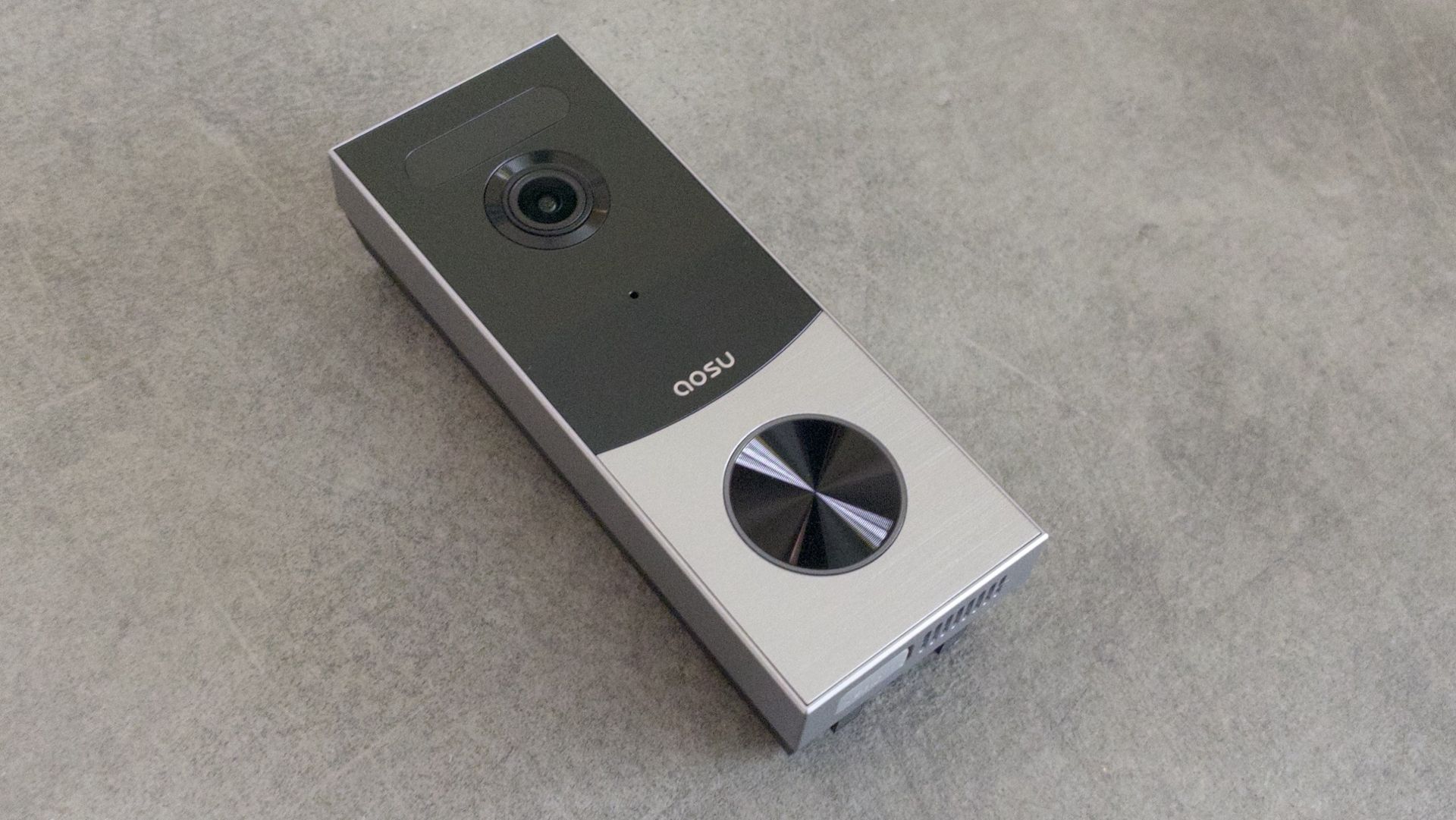
Detection is another strength. Rather than relying on a passive infrared sensor and hoping, Aosu layers radar and AI human recognition on top, which lets it judge distance and intent — approaching versus passing, lingering versus walking through.
There’s also a Tone button hiding in the two-way talk screen. Tap it, and you can answer the door as either ‘uncle’ or ‘clown’, with Aosu’s straight-faced explanation that this disguises your voice for privacy.
The uncle setting artificially deepens voices, transitioning women and children to something resembling a man to deter would-be intruders. Clown goes all high-pitched and distorted to mask your identity.
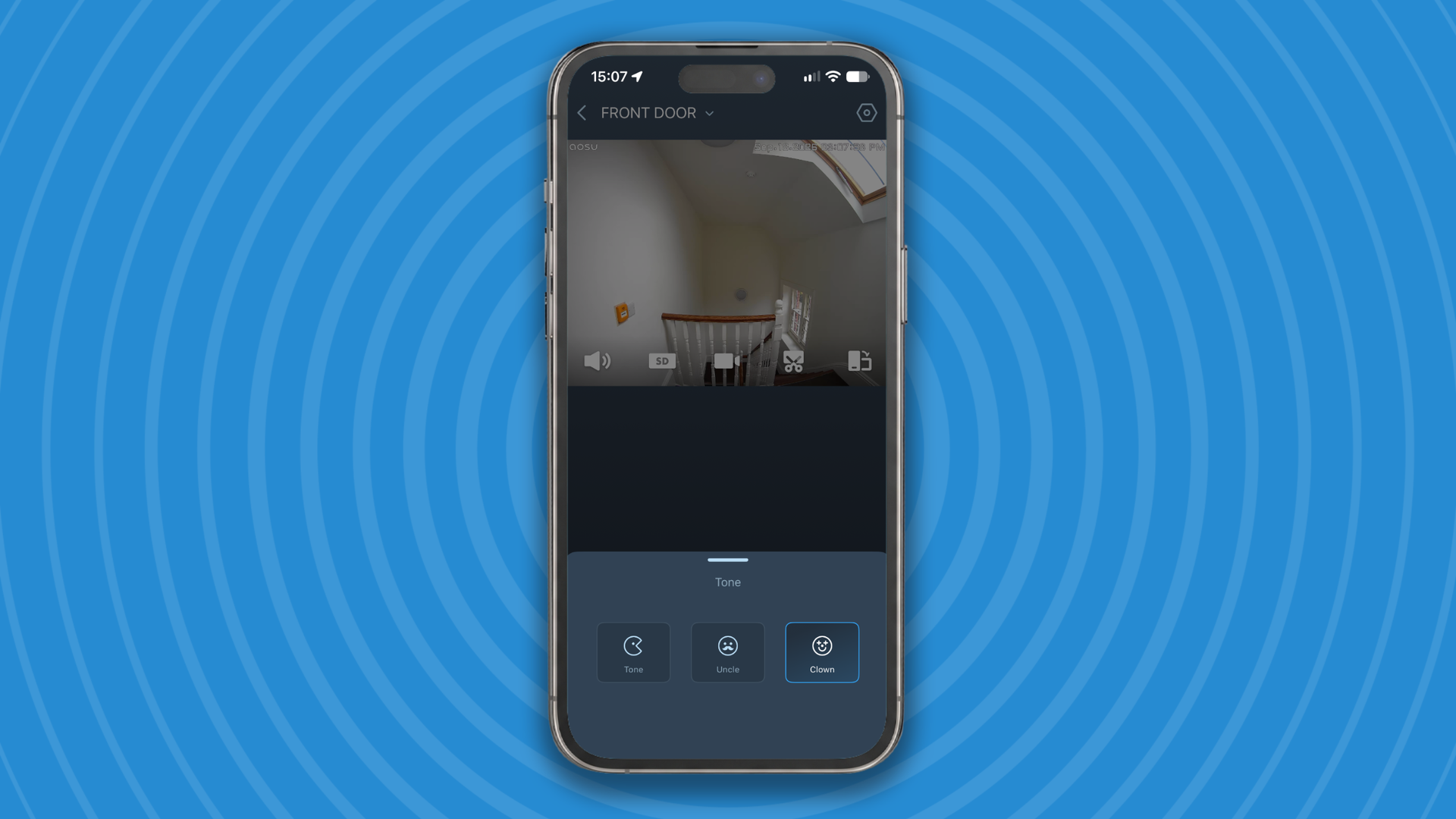
Fortunately, the latter falls on the right side of sinister, so you can forget scaring off trick-or-treaters with imitations of South Park’s Mickey Mouse.
Where Aosu gets ahead of itself is resolution and framing. The sensor is 2560 x 1920, which is 4.9 megapixels in a 4:3 frame. That’s sharp, and a step up from 2K doorbells at this price, but not the claimed ‘UHD’, which would be 3,840 x 2,160.
The asserted 60% improvement over standard 2K only holds if the 2K you’re comparing against is Aosu’s own 3MP doorbell. An earlier version of the identical claim, on the identical camera, said 40%.
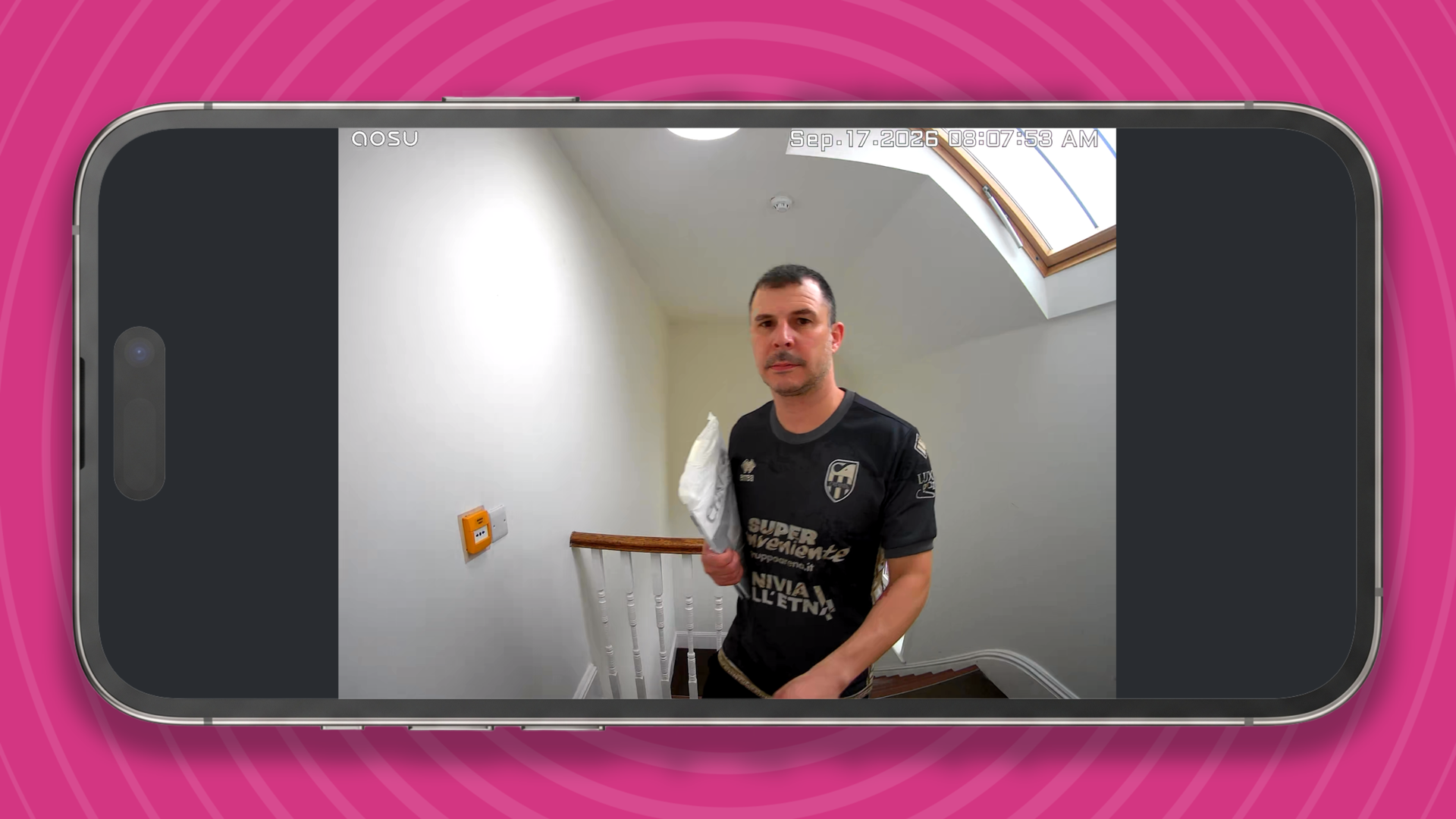
Field of view should be taken with a pinch of salt, too. Aosu says 166 degrees, but that’s the corner-to-corner measurement. In reality, it’s 133 horizontal by 103 vertical, shot in a shallow 4:3 aspect ratio and no head-to-toe image tricks.
With realistic use, the battery should last six months between charges. The kicker is the cell isn’t quick-release, and juicing it from flat to full takes six hours. So that means unclipping the entire doorbell and going without it for quite a while.
Aosu Video Doorbell R1 Ultra: price & availability
- List price: £139.99 / $135.99 (about AU$190)
- Launched July 2026 in the UK
- Available in the UK, US, and across the EU
With a list price of $135.99 / £139.99 (about AU$190), but usually discounted, the R1 Ultra is filed under ‘affordable’ and veers towards bargain territory if you find one hovering around the £100 mark.
At that price, the value case is strong, because the base station is in the box rather than a £50 upsell, and the 60 days of local recording would cost you a subscription almost anywhere else.
Over three years, that’s the difference between a hundred pounds and several hundred more.
- Value score: 4/5
Aosu Video Doorbell R1 Ultra: subscription costs
The R1 Ultra is fully functional without a subscription. Alerts, live view, two-way talk, detection zones, and 60 days of local playback are all included.
AosuProtect+ is the optional cloud add-on. In the UK, it’s advertised at £9.99 (about $10 / AU$20) a month or £122.99 (about $160 / AU$230) a year, currently discounted to £3.49 (about $5 / AU$10) and £39.99 (about $50 / AU$80). Treat the higher figures with the same suspicion as the hardware list price.
The annual price is simply the monthly rate multiplied by twelve, so there’s no built-in saving for paying up front, and £3.49 lands within pennies of what Aosu charges in dollars in the US. There’s a 30-day free trial if you wish to dip your toe.
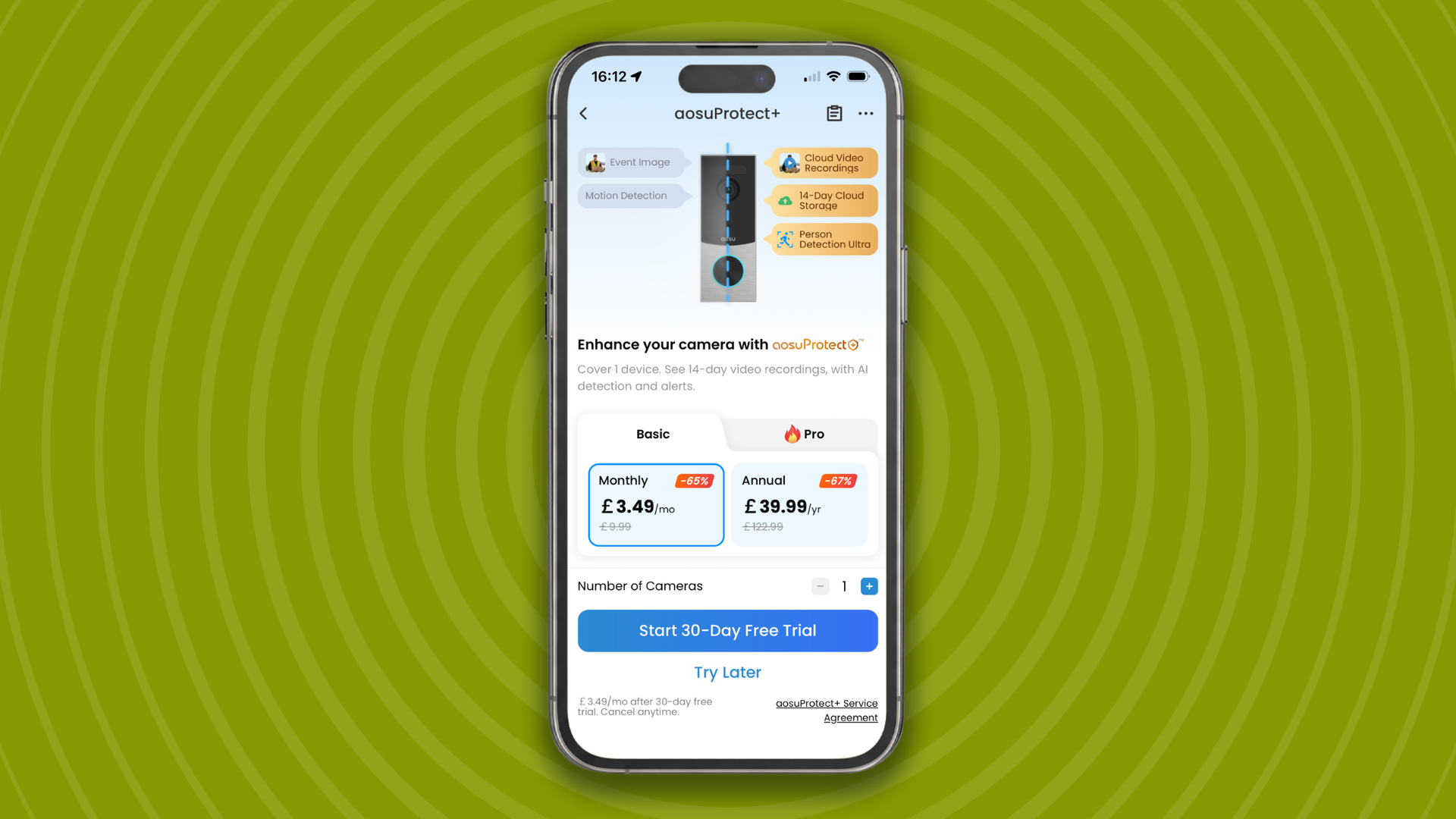
What it buys you is cloud backup rather than capability: 14 or 30 days of event recordings, playback from anywhere, faster scrubbing, and bulk downloads. AI facial recognition sits on the top tier and is offered for video doorbells only.
The argument for paying is that local storage is bound to the base station like Bilbo Baggins is bound to the ring in The Lord of The Rings. If it fails, someone takes it, or you inexplicably drop it in the fires of Mount Doom, your footage dies with it.
Aosu Video Doorbell R1 Ultra: specs
|
Feature |
Specification |
|
Type |
Battery-powered or hardwired video doorbell; base station required |
|
Resolution |
5MP (2560 x 1920) with WDR |
|
Zoom |
6 x digital |
|
View |
4:3 aspect ratio |
|
Field of view |
166 degrees diagonal [133 x 103 degrees] |
|
Night vision |
Infrared up to 6 feet / 10m |
|
Audio |
Two-way talk with voice disguise features |
|
Motion detection |
Radar, PIR and AI human recognition; customizable zones |
|
Power |
Rechargeable battery 5,000mAh, non-removable; USB-C cable included; 6 hours from flat; hardwire (8–24VAC) |
|
Connectivity |
Doorbell 2.4GHz only; AosuBase Mini dual-band 2.4GHz / 5GHz |
|
Smart detection |
AI human recognition; facial recognition requires AosuProtect+ |
|
Storage |
Local, 8GB on AosuBase Mini, 60-day loop, no subscription; optional cloud with AosuProtect+ |
|
Smart home |
Amazon Alexa, Google Assistant |
|
Tamper protection |
Pry detection with chime alert; footage retained locally |
|
Weather |
IP65 |
|
Finish |
Black/silver |
|
Dimensions |
5 x 2 x 3 inches / 12.7 x 5.1 x 7.6cm |
Aosu Video Doorbell R1 Ultra: design and installation
- Plain but solid
- Hub required indoors
- Battery or existing wiring
The R1 Ultra is a black plastic slab with silver flourishes similar to a Ring, and very little design ambition beyond flattering imitation.
Installation is straightforward and takes about half an hour all in. Bracket on the wall, doorbell clipped on top, base station plugged in somewhere central.
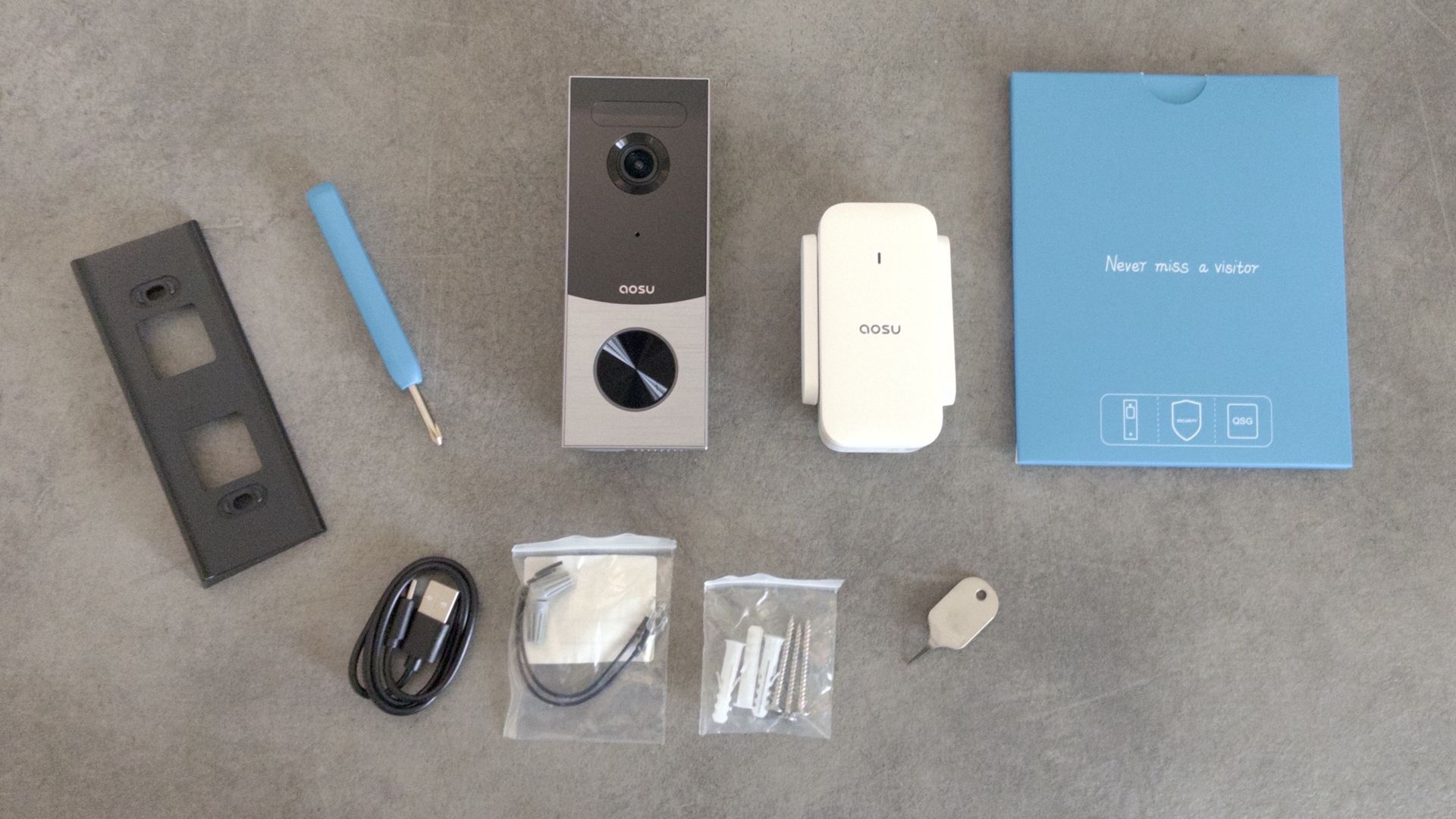
Aosu recommends mounting at 4 feet / 1.2 meters rather than eye-level, which is lower than instinct suggests but necessary if you want the frame to reach the doorstep. Worth getting right the first time rather than re-drilling.
A 15-degree wedge is included if you need to angle it towards a path or a gate, along with a screwdriver, extension wires and wire nuts for anyone hardwiring to existing 8–24V doorbell wiring.
The base station isn’t optional, and it isn’t outdoors-rated. It’s the storage, the chime, and the Wi-Fi bridge in one. It needs a mains socket permanently, and it’s rated only to 14°F / −10°C, so it lives in the hall or the cupboard under the stairs and stays there.
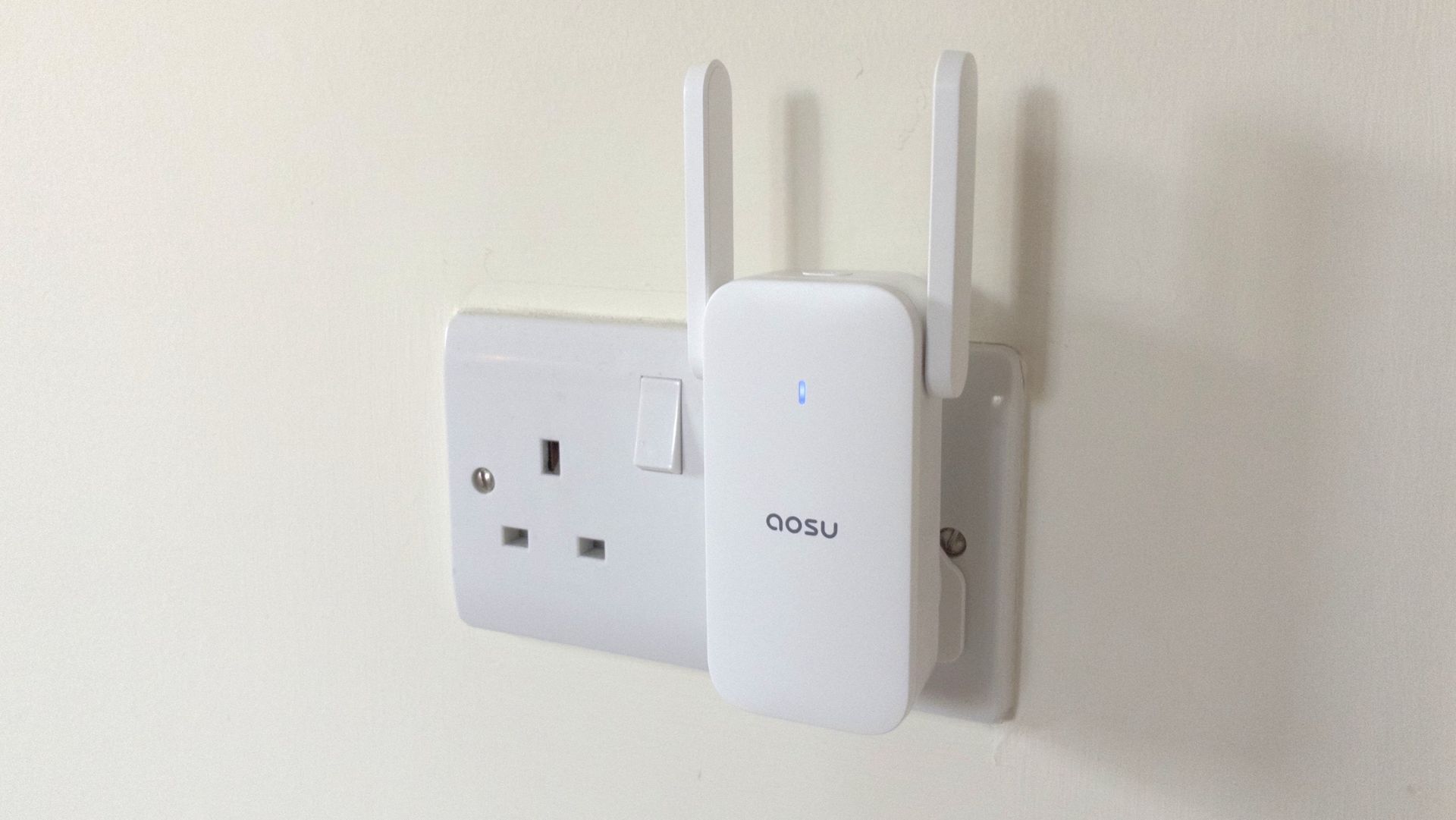
Detaching the whole unit from the wall for a full six-hour recharge via USB-C is a weak point, but a cable is bundled in the box.
A neat addition is pry detection. Try to lever the unit off its bracket, and it sounds a chime and pushes an alert, with footage on the base station indoors rather than on what’s being stolen.
- Design score: 3.5/5
Aosu Video Doorbell R1 Ultra: performance
- Sharp in daylight
- Strong multi-sensor detection
- Infrared-only after dark
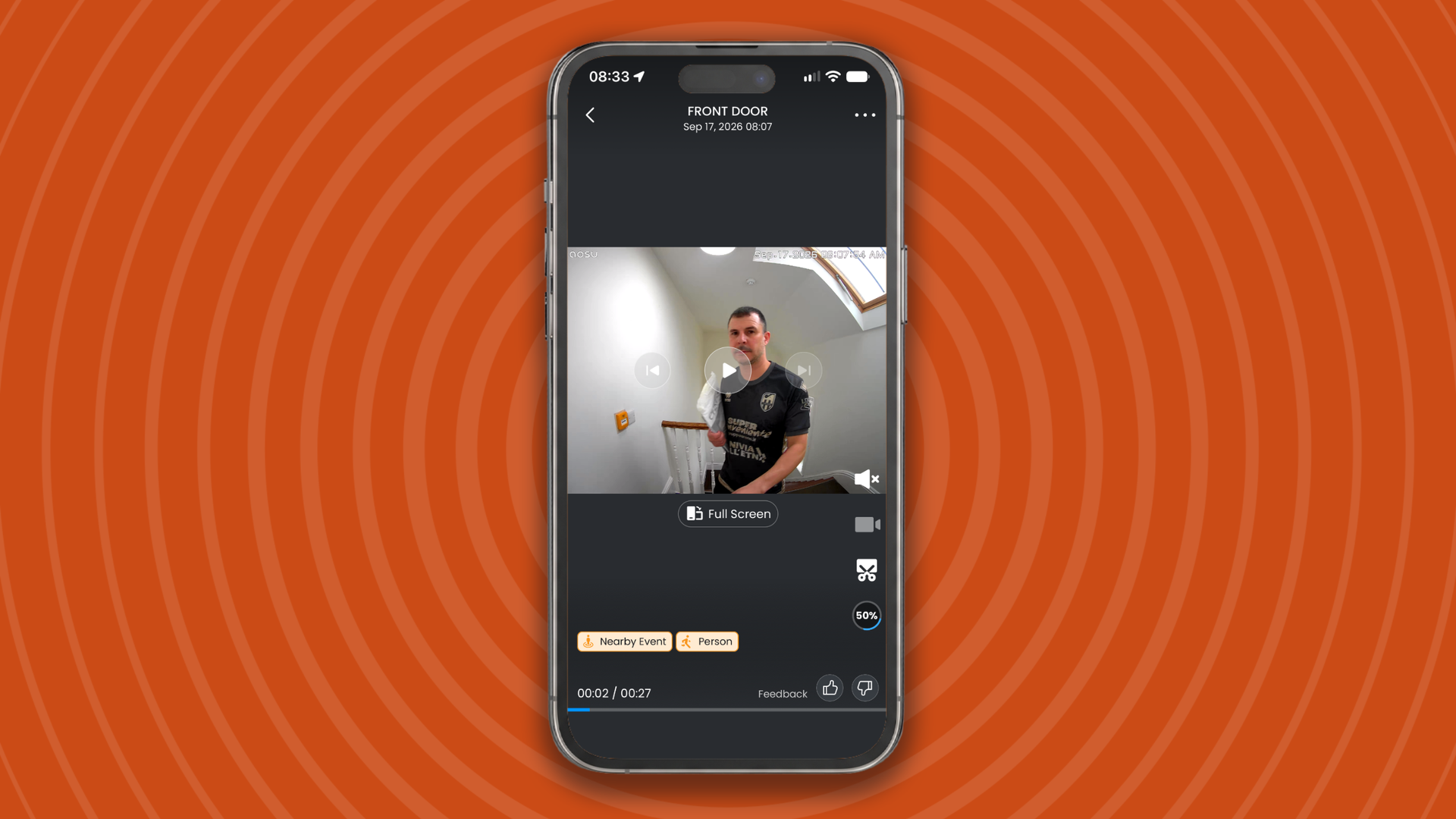
Daylight is this doorbell’s happy place, with 5MP more than most similarly-priced rivals offer. Faces, delivery uniforms and parcel labels are legible rather than merely present.
Radar handles distance and movement, PIR picks up body heat, and the AI layer decides whether what it’s looking at is a person. During testing, alerts felt instantaneous once someone reached the door.
After dark, expectations need managing. There is no color night vision and no spotlight.
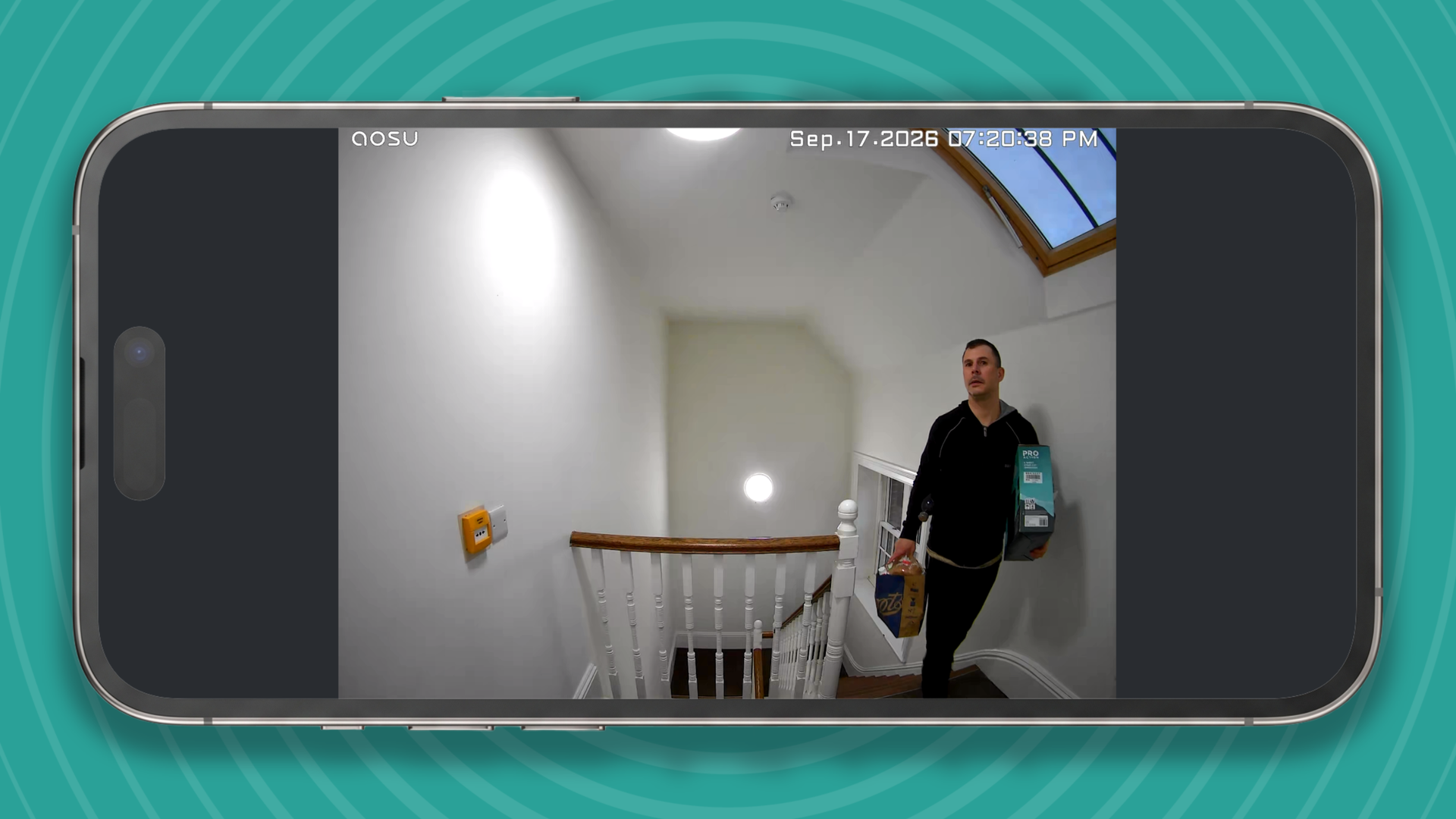
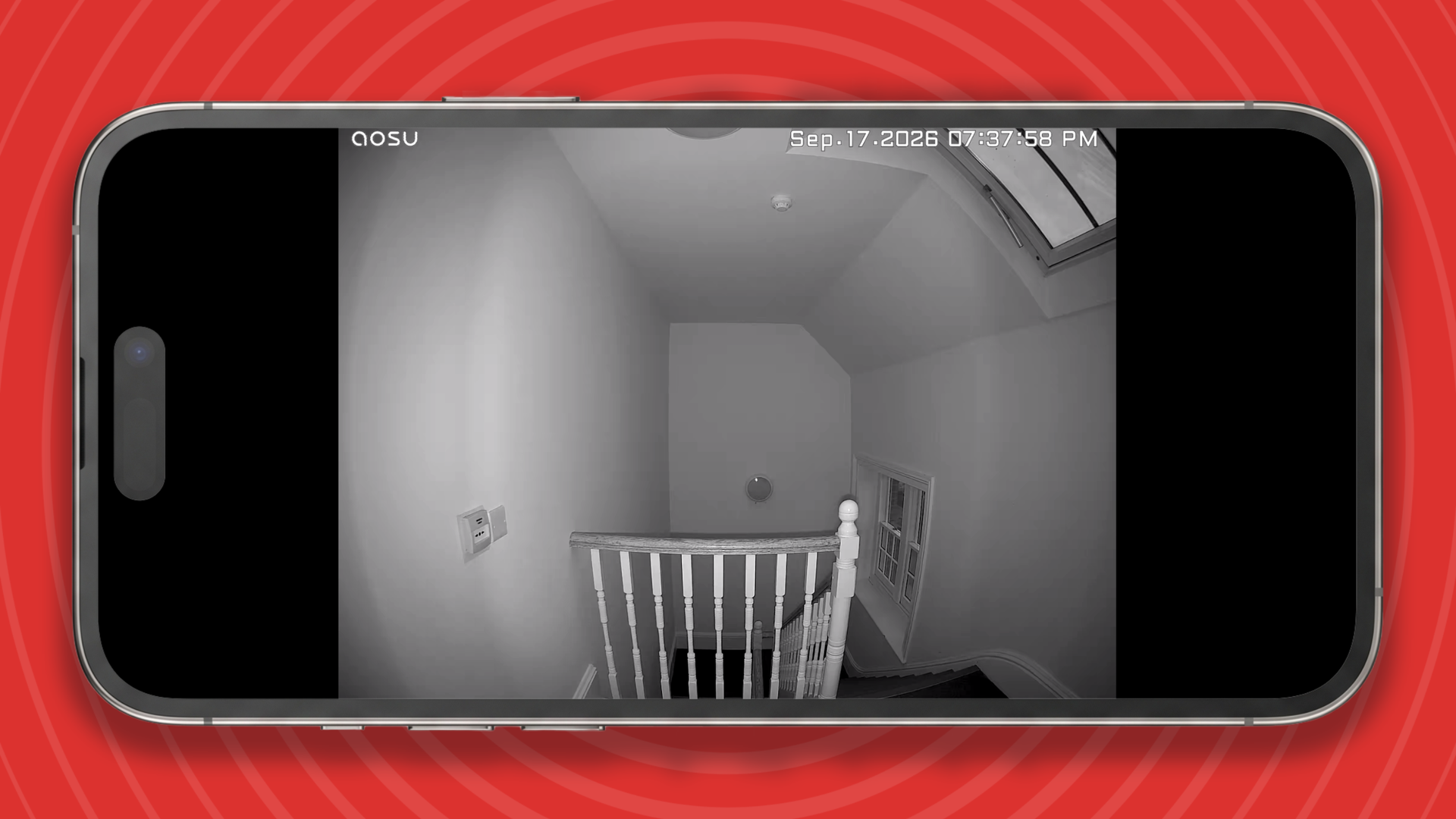
Eight 850nm infrared LEDs offer monochrome up to 33 feet / 10 meters, and the manual warns mounting too close to a side wall will bounce IR back into the lens and fog the image. I’d pair the R1 Ultra with an outdoor light to make up for the shortfall.
Answering the door is well handled. Notifications arrive with a thumbnail of whatever triggered them, so you can tell a courier from a cat without opening the app, and tapping through starts a proper two-way video call rather than a one-way stream.
The 6x digital zoom lets you crop into a face or a label, though at 15fps and with a wide lens, it softens quickly.
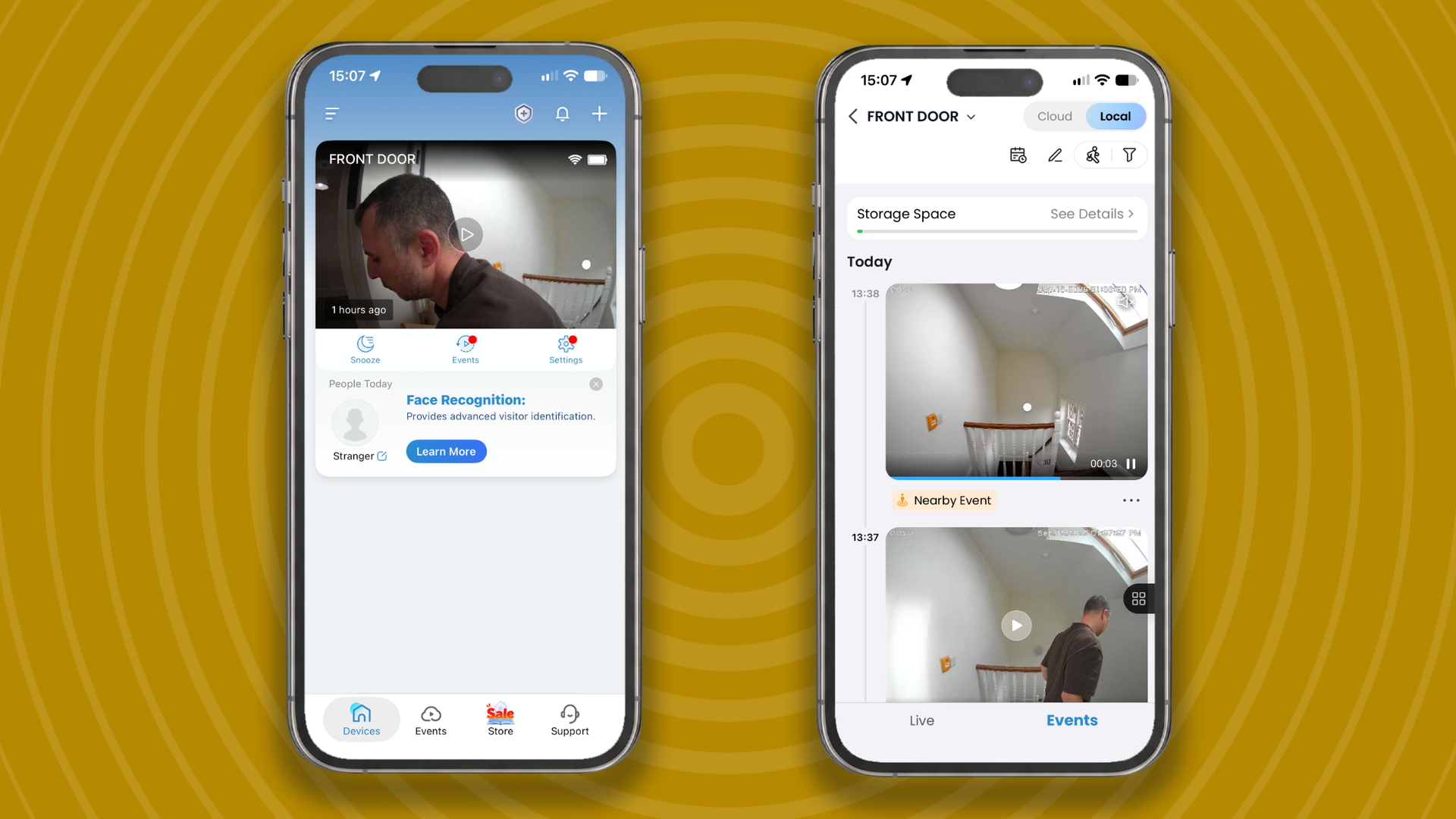
Quick Reply issues an audible preset message when you can’t talk. Somewhat boringly, they’re fixed, so you can’t edit the wording or add your own.
On connectivity, the doorbell itself is 2.4GHz only; the dual-band capability belongs to the AosuBase Mini, which talks to your router on 2.4 or 5GHz.
That’s a sensible design for a battery device, but it means the camera-to-base link is on the crowded band and placement of the base matters more than usual. Plugged in 33 feet / 10 meters from my front door with the broadband router halfway, all was fine.
Live view includes a UHD/SD toggle to drop the quality when the connection struggles, and you can save a clip or a still straight to your phone’s camera roll if you ever need to hand something to a neighbor or the police.
The six-month battery figure assumes up to ten events a day at 20 seconds each — about three-and-a-half minutes of recording daily. On a busy porch with a path or pavement in frame, expect considerably less.
- Performance score: 3/5
Should you buy the Aosu Video Doorbell R1 Ultra?
|
Attribute |
Notes |
Score |
|---|---|---|
|
Value |
Local storage, included base station, and no monthly fee at around £100 make the maths hard to argue with. |
4/5 |
|
Design |
Solid and easy to install, but the base station needs a permanent socket, and recharging equals doorbell removal. |
3.5/5 |
|
Performance |
Sharp daylight video and excellent multi-sensor detection, let down by infrared-only night vision and overstated specs. |
3/5 |
Buy it if
You’re sick of subscriptions
Sixty days of local recording on the included base, with nothing important behind a paywall, is undoubtedly attractive.
You’d rather not be yourself
Uncle and clown voice settings let anyone home alone answer the door sounding like someone else.
You want fewer useless alerts
The radar, PIR, and AI combination is a real step up from the single-sensor budget crowd, and it shows in your notification tray.
You have existing doorbell wiring
Hardwiring to 8–24V takes the recharging problem off the table entirely, and this is one of the cheaper doorbells that supports it.
Don’t buy it if
You need to see faces after dark
Infrared monochrome to 33 feet / 10 meters is all you get. There’s no spotlight and no color low-light mode, so a night clip tells you someone was there, but not necessarily who.
You don’t want to remove the doorbell
No quick-release battery means every recharge is a six-hour outage with the unit off the wall and on your kitchen counter.
Aosu Video Doorbell R1 Ultra: also consider
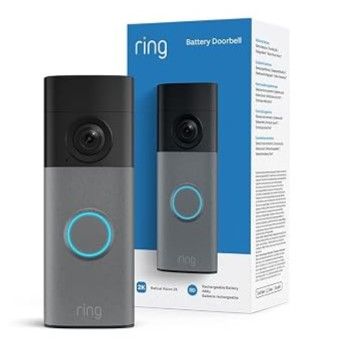
Ring Battery Video Doorbell (2nd Gen)
Cheaper, shoots Retinal 2K with a genuine head-to-toe 1:1 view and color night vision, and installs without a hub. The trade-off is Ring’s subscription model and Amazon’s data record.
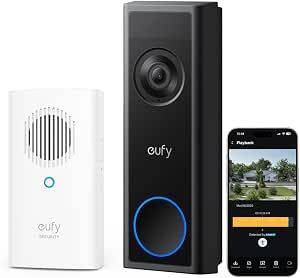
Eufy Video Doorbell C31
The closest like-for-like on the no-monthly-fee promise, with 2K video and a quick-release battery, though you’ll want a HomeBase to get the most from it.
How I tested the Aosu Video Doorbell R1 Ultra
- Fitted to a domestic front door
- Assessed daylight and infrared video, detection accuracy, and audio
- Ran entirely without a subscription
I mounted the R1 Ultra on my own front door and used it as the household’s main entry camera for a fortnight, deliberately running it on local storage alone so the no-subscription claim could be tested as most buyers will experience it.
I checked live-view responsiveness and alert latency, reviewed clips in daylight and after dark, and tracked battery drain against Aosu’s 180-day claim.
First reviewed September 2026