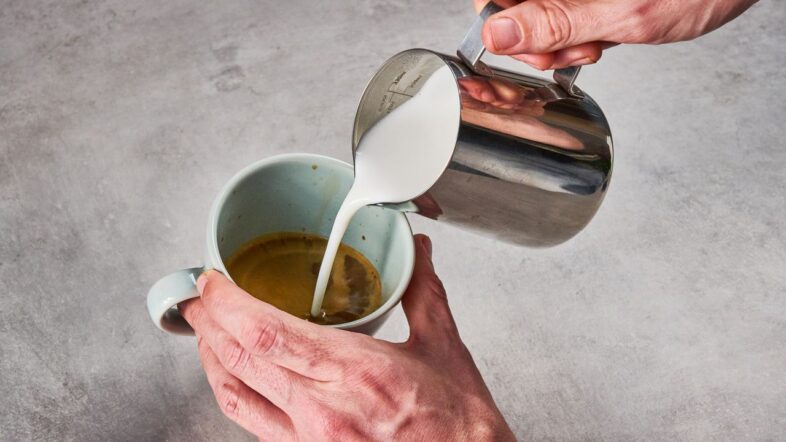
If you love coffee, you’ll be very aware of the impact of factors like grind size, water temperature, and infusion time, but there’s something else that’s often overlooked. A double espresso is at least 90% water, and the minerals and other substances it contains can have a huge impact on the overall taste.
I’m a big coffee-drinker (which is just as well, since I test over a dozen coffee makers every year for TechRadar), and I’m planning to buy a water filter to take my brewing to the next level — but what should I look for — and what should you consider if you’re thinking of taking the plunge into filtered water too?
To find out, I spoke to Andy McPhilbin, Head of Aquaphor Professional for UK and Ireland, and Genevieve Upton, beverage industry expert and Head of Water Filtration at Our Taap.
Why does water matter?
“Water quality can have a considerable impact on how coffee tastes, with chlorine, mineral composition, alkalinity and pH all influencing the final flavour profile,” says Upton.
“Most tap water supplied to UK homes is disinfected using chlorine-based compounds. Residual chlorine can react with components in coffee and tea, contributing bitter, medicinal or chemical notes that may overwhelm the more delicate characteristics of the coffee. Boiling water can reduce the levels of chlorine, though it can also create other unwanted flavours, such as by reacting to a plastic kettle.”

Become a TechRadar Insider by simply clicking ‘Join Now’ at the top of this page. Have a question? Please email membership@techradar.com
She explains that the mineral composition and pH of the water also play an important role when it comes to how your coffee tastes.
“Slight differences in acidity, together with the concentrations of minerals and buffering compounds, influence extraction efficiency and the balance of flavors in the final cup. As water companies vary their supply sources throughout the year, you might notice that the same beans, brewed in exactly the same way, taste different from season to season.”
In fact, using unfiltered water doesn’t just mean your coffee tastes sub-optimal – it could cause your expensive coffee machine to break down — and it won’t be covered by the manufacturer’s warranty..
“The warranty only covers manufacturing defects, and unfortunately, hard water is not a manufacturing defect,” explains McPhilbin. “So you can turn something that is a very efficient espresso machine into something very inefficient within a matter of weeks. You get a millimeter of scale forming within a matter of six weeks.
“Now, is that important? It is, because you want the life of the machine to be good, but also you’ve got little injectors which put the right amount of water into that espresso. If they’re blocked, you’re not going to get the right amount of water. You’re going to have the wrong taste. It’s got to be precise.”
What types of filtration are there?
Our Taap specializes in home water filtration Its latest system is the Our Taap Home Water System II — a countertop unit that connects to your mains water supply, and uses a triple filtration system with UV purification to remove contaminants while retaining minerals.
Aquaphor makes water filters for commercial and home use, including under-sink systems, pitchers, and even water bottles. Its most advanced systems for home users are the RO-101, RO-102, and RO-202, all of which use reverse osmosis (RO).
This involves forcing water through a semi-permeable membrane that removes chlorine, bacteria, viruses, pesticides, and microplastics. Standard RO filters also strip out minerals, but Aquaphor’s systems can optimize the concentration of calcium and magnesium so they’re just right for coffee — something McPhilbin says “really is a science”.
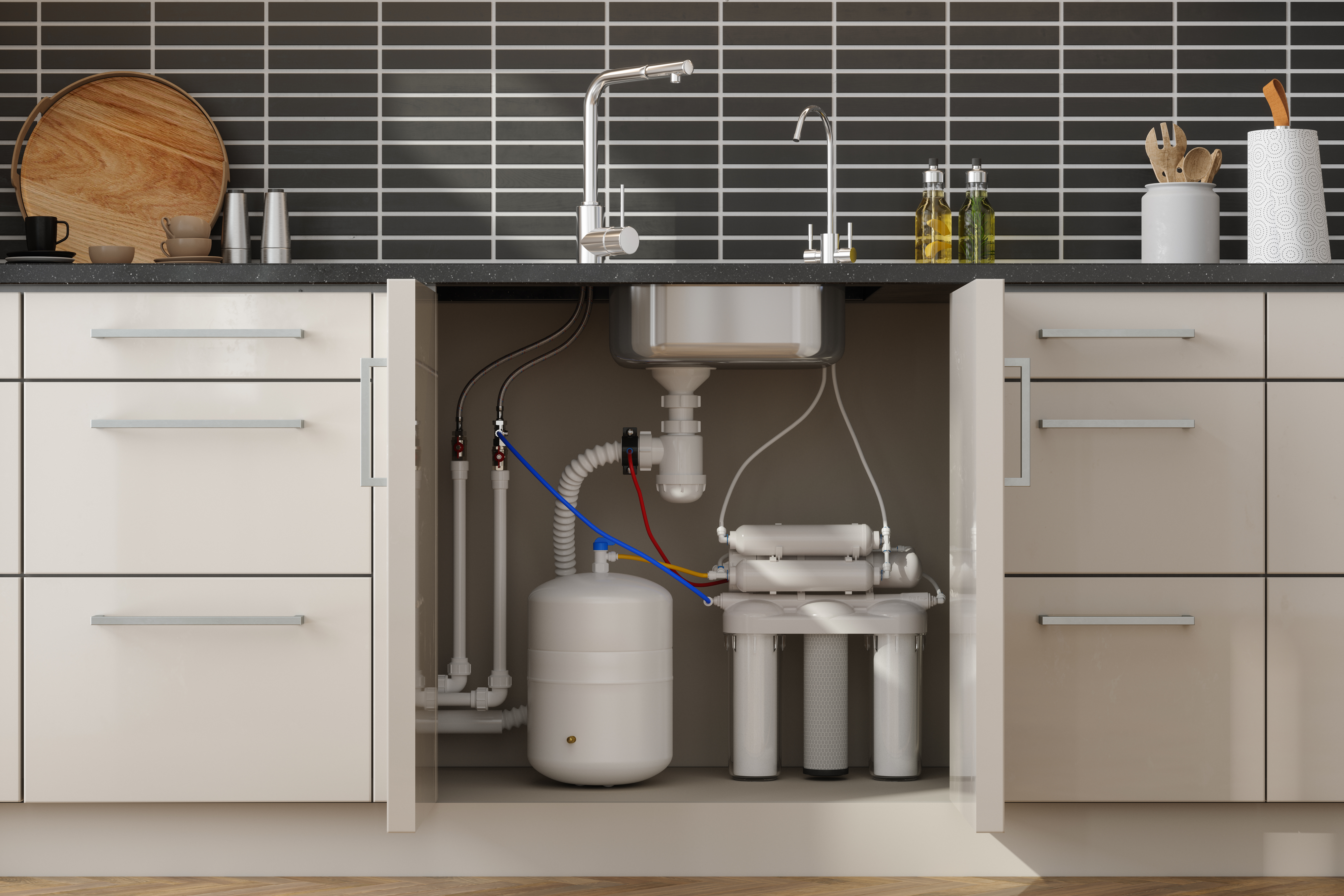
“The mineral content is measured in TDS [total dissolvable solids], and we want that TDS to be somewhere in the realms of between 80 and 120 [parts per million],” he explains. “We have a couple of ways in which we do it, but generally we can either feed more minerals in it by making it tuneable, or we can take them out as well by turning it the other way. But if you have too little, you can cause corrosion, and if we have too much, we’re going to get limescale. So we try to hit that sweet spot, which is 100 parts per million in the middle there.”
Our Taap’s filters use granular activated carbon filtration, which Upton says “is particularly good at removing chlorine and some of its by-products, which can mask the more delicate flavour notes in coffee.”
the water has a cleaner, more neutral taste, allowing the natural characteristic of the coffee beans to come through
Genevieve Upton, Our Taap
“By reducing these compounds, the water has a cleaner, more neutral taste, allowing the natural characteristic of the coffee beans to come through. Whether you’re brewing with a cafetière, pour-over or espresso machine, using filtered water can help create a smoother, more balanced cup with greater flavour clarity.
“It’s worth remembering, however, that activated carbon filters are designed primarily to remove chlorine and certain organic compounds rather than minerals,” she adds. “As a result, they have little effect on the calcium, magnesium and bicarbonate levels that influence water hardness, alkalinity and extraction.”
Under-sink or countertop?
So which type of filter is right for you? Do you need an under-sink reverse-osmosis system, or would a countertop filter be better? McPhilbin says the decision will mostly depend on how much filtered water you need.
“I think it’s down to capacity more than anything,” he says. “Our jug filters have twice the capacity of the competition because we use a unique media called Aqualen, which is a patented media based on ionic exchange and carbon, so you’re getting a dual-purpose piece of filtering equipment there. Reverse osmosis has a massive capacity, and [the filter] is not something [you’re] changing all the time.”
Upton says your choice of filter will also depend on the problem you want to solve.
“If your tap water has a noticeable chlorine taste or smell, a filter with activated carbon is usually the best place to start,” she says. “This technology is available in everything from filter jugs to more advanced under-sink or countertop systems, with plumbed-in options offering great convenience for households that use filtered water regularly.
“If you’re dealing with limescale build-up in kettles or coffee machines, it’s important to choose a filter that specifically reduces water hardness, as not all filtration systems are designed to do this.”
You can turn something that is a very efficient espresso machine into something very inefficient within a matter of weeks
Andy McPhilbin, Aquaphor
I know I live in a hard water area (the limescale in my kettle is proof) but even if your tap water is soft, McPhilbin says a water filter is still a good investment.
“Most of the water in the UK is chlorinated, and that can affect the taste quite a lot,” he says. “And it might be that you’ve not got enough minerals in it to get the best taste.”
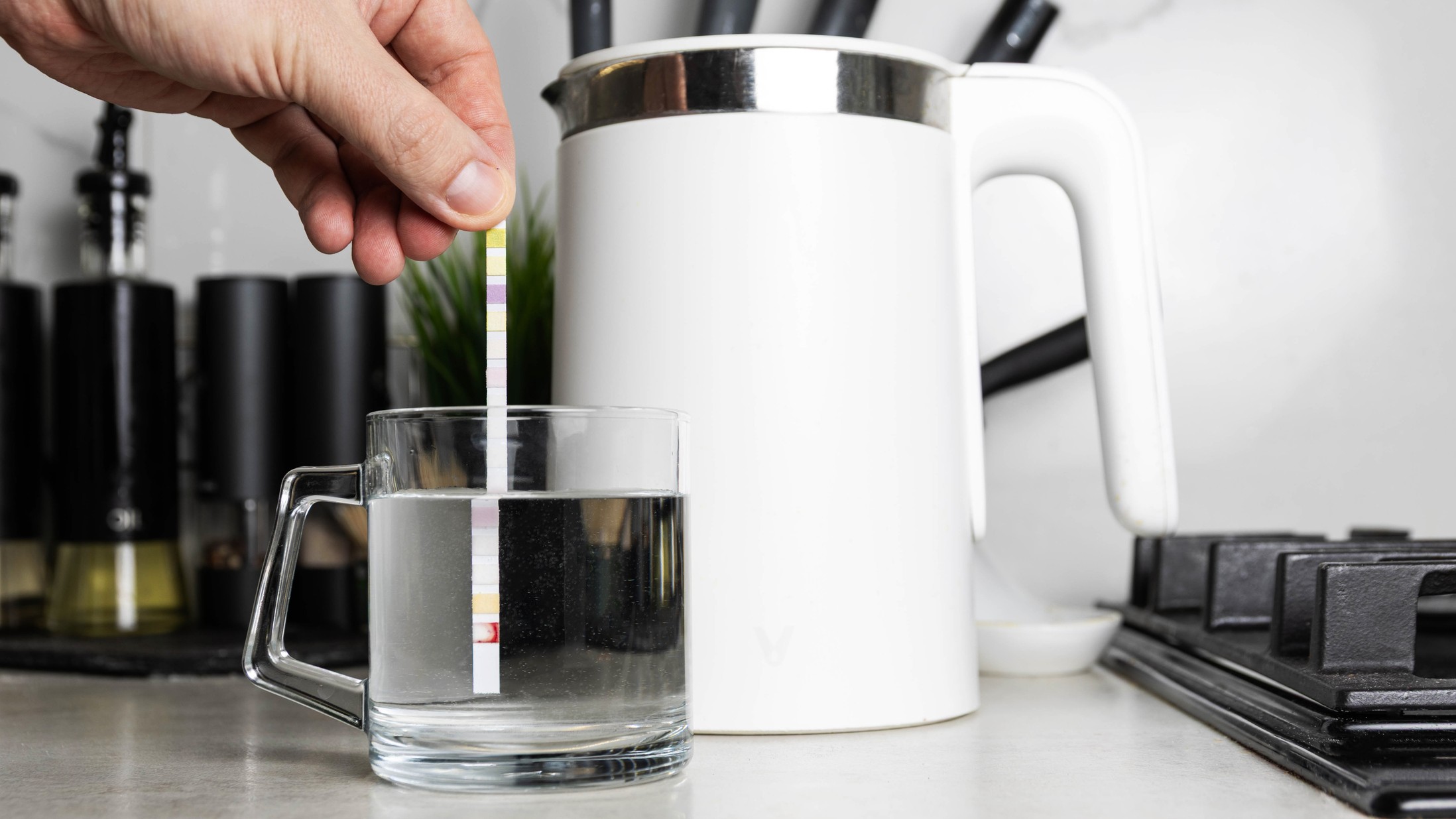
If you’re not sure about the type of water you’re working with, there are online tools that can help you understand its composition.
“The Our Taap Water Confidence Index is a great way to look up your postcode and understand what’s in your local water and how this impacts taste, scent and quality, so you can find the best filter for your needs,” says Upton.
According to the Confidence Index, I’m lucky – my tap water is better than 93% of UK postcodes. However, it is moderately hard (as I expected), with a normal level of chlorine and an elevated level of overall minerals. I’m still deciding exactly which type of filter to choose, but considering these results and my penchant for espresso, I’m leaning towards under-counter reserve osmosis with mineral balancing. What about you?